
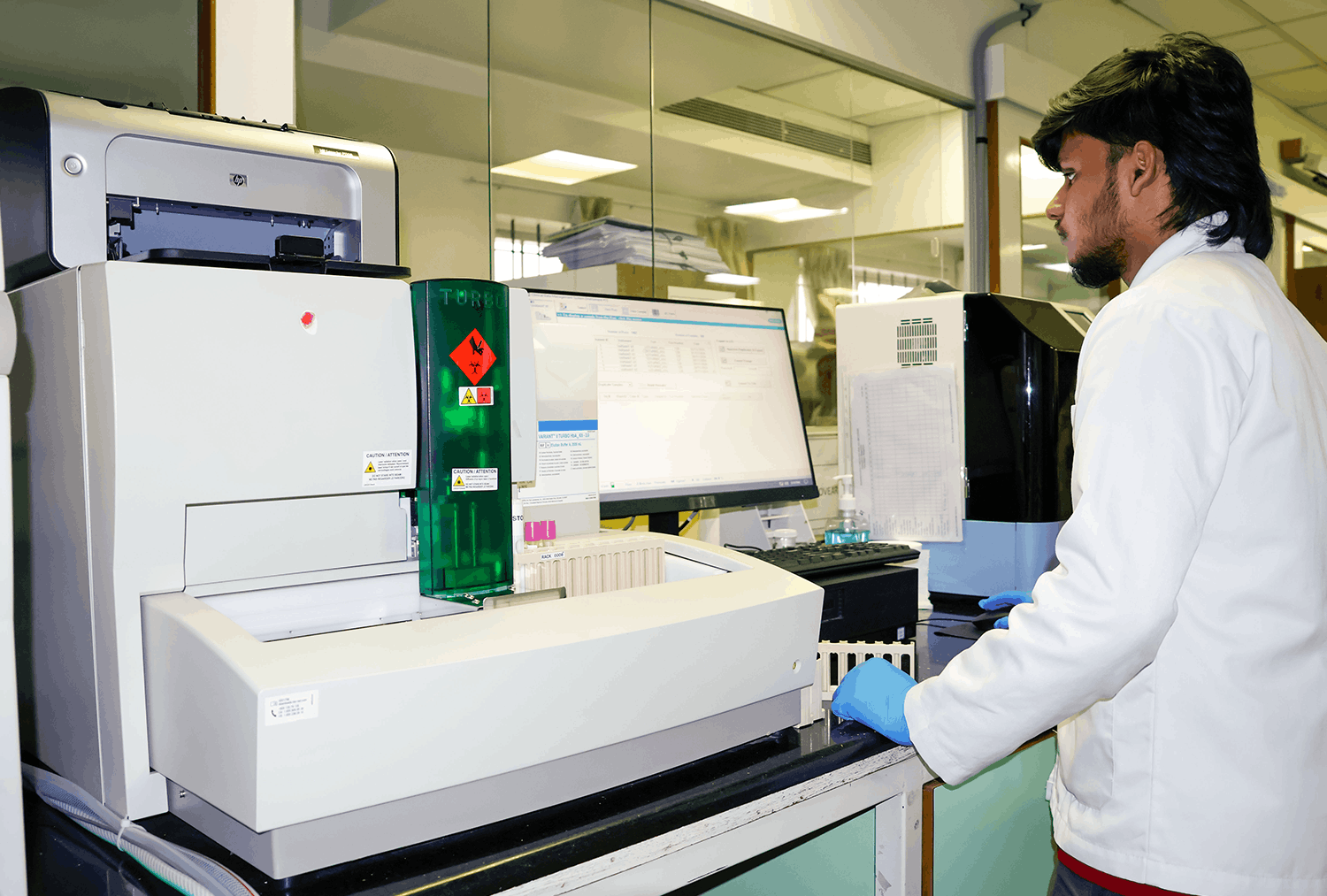
Biochemistry
At Padmashree Diagnostics, our biochemistry department plays a crucial role in accurate disease detection and monitoring. We provide a wide range of tests, from routine blood chemistry to advanced metabolic panels, ensuring precise and reliable results. With state-of-the-art technology and highly qualified pathologists, we help doctors and patients make informed treatment decisions.
For over two decades, Padmashree has set benchmarks in diagnostic excellence in Bengaluru. Our commitment to accuracy, affordability, and patient-centric care continues to make a strong impact and we have much more ahead.
List of Biochemistry Tests
Showing 0 of 0 services
1
1 Hour Blood Glucose
- Measures blood sugar exactly one hour after glucose intake. Used mainly in diabetes screening and gestational diabetes evaluation.
2
2 Hour Blood Glucose
- Checks sugar level two hours after a glucose load or meal. Helps assess glucose tolerance and diagnose diabetes or prediabetes.
3
24 Hours Urinary Protein Estimation
- Measures total protein excreted in 24 hours. Helps evaluate kidney diseases and severity of protein loss.
4
24 Hours Urine for Osmolality
- Assesses concentration ability of kidneys by measuring dissolved particles in urine collected over 24 hours.
5
24 Hrs Urine Creatinine Clearance
- Determines kidney filtration rate using urine and blood creatinine. One of the most accurate tests for kidney function.
6
24 Hrs Urine for Chloride
- Measures chloride excretion over a day. Helps diagnose electrolyte imbalance, dehydration, and adrenal disorders.
7
24 Hrs Urine for Micro albumin Creatinine Ratio
- Detects early kidney damage, especially in diabetic and hypertensive patients, by checking albumin leakage.
8
24 Hrs Urine for Potassium
- Measures potassium elimination. Useful in evaluating adrenal gland disorders and kidney function.
9
24 Hrs Urine for Protein
- Evaluates total protein loss in the urine over 24 hours. Helps detect nephrotic syndrome and kidney inflammation.
10
24hrs Urine for BUN
- Measures urea nitrogen excretion. Helps assess kidney performance and nitrogen balance.
11
24hrs Urine for Calcium
- Checks calcium loss in urine. Used for diagnosing kidney stones, parathyroid disorders, and metabolic bone disease.
12
24hrs Urine for Creatinine
- Measures daily creatinine excretion. Helps estimate muscle mass and confirm accurate collection for other tests.
13
24hrs Urine for Electrolytes
- Evaluates 24-hour sodium, potassium, and chloride. Useful for hypertension, kidney disease, and fluid imbalance assessment.
14
24hrs Urine for Glucose
- Checks glucose excretion across 24 hours. Indicates uncontrolled diabetes or renal glycosuria.
15
24hrs Urine for Inorganic Phosphorous
- Measures phosphorus elimination. Helps evaluate bone metabolism and kidney handling of minerals.
16
24hrs Urine for Magnesium
- Measures magnesium excretion. Useful for diagnosing deficiency, malabsorption, or kidney-related magnesium loss.
17
24hrs Urine for Micro albumin
- Detects small amounts of protein leakage. Essential for early detection of diabetic kidney disease.
18
24hrs Urine for Phosphorous
- Measures total phosphorus eliminated. Helps assess kidney function and bone metabolism disorders.
19
24hrs Urine for Sodium
- Measures sodium output. Helps evaluate hydration, adrenal disorders, and hypertension management.
20
24hrs Urine for Urea
- Measures urinary urea excretion. Indicates protein metabolism and kidney excretory function.
21
24hrs Urine for Uric Acid
- Checks uric acid elimination. Helps diagnose gout, kidney stones, and metabolic problems.
22
24hrs Urine Protein/Creatinine Ratio
- Provides protein loss relative to creatinine, avoiding the need for full 24-hour protein estimation.
23
Albumin
- Measures serum albumin levels. Indicates nutritional status, liver function, and kidney health.
24
Albumin (Fluid)
- Determines albumin in body fluids such as ascitic or pleural fluid. Helps assess infections, liver disease, and fluid balance.
25
Alkaline Phosphatase
- An enzyme from liver and bone. Elevated levels indicate bile duct obstruction or bone disorders.
26
Amylase
- Digestive enzyme primarily from the pancreas. High values may indicate pancreatitis.
27
Amylase (Fluid)
- Measures amylase in fluids like ascetic or pleural fluid. Helps differentiate pancreatic vs non-pancreatic causes of fluid accumulation.
28
Androgen Profile
- Panel assessing male hormones like testosterone, DHEA, and others. Used for infertility, PCOS, and endocrine disorders.
29
Anti-Microsomal antibody (Anti-TPO)
- Autoantibody against thyroid cells. Indicates autoimmune thyroiditis such as Hashimoto’s disease.
30
Anti Mullerian Hormone
- Reflects ovarian reserve. Used in fertility evaluation and assessing menopause timing.
31
Anti Thyroperoxidase Antibody
- Same as Anti-TPO. Detects autoimmune damage to the thyroid gland.
32
Antibody To Thyroglobulin
- Autoantibody associated with Hashimoto’s and other thyroid autoimmune conditions.
33
Ascitic Fluid for Total Protein
- Measures protein content in abdominal fluid. Helps differentiate portal hypertension from infections.
34
Beta - HCG
- Pregnancy hormone measured in blood. Also used in evaluating ectopic pregnancy and certain tumours.
35
Bilirubin
- Measures total and direct bilirubin. Indicates liver function, hemolysis, and bile duct obstruction.
36
Bilirubin (Fluid)
- Assesses bilirubin in body fluids to detect bile leaks or jaundice-related complications.
37
Bioavailable Testosterone
- Measures the active portion of testosterone. Important for evaluating androgen deficiency or excess.
38
Blood Urea Nitrogen
- Reflects kidney function and protein metabolism. High levels indicate kidney impairment or dehydration.
39
CA - 125
- A marker elevated in ovarian cancer. Also increases in benign conditions like cysts and endometriosis.
40
Calcium Total
- Measures total calcium in the blood. Essential for diagnosing bone disorders, parathyroid disease, and kidney dysfunction.
41
Carcinoembryonic Antigen
- Tumor marker used in colon cancer monitoring. Elevated in smokers and some gastrointestinal cancers.
42
Cardiac Enzymes
- Includes CK-MB, Troponin, LDH, etc. Used to diagnose heart attacks and myocardial injury.
43
CGMS - Continuous Glucose Monitoring System
- Provides continuous glucose readings through a wearable sensor. Helps manage diabetes more effectively.
44
Chloride
- Major electrolyte involved in acid-base balance. Abnormal levels indicate dehydration or metabolic disturbances.
45
CHOL : HDL Ratio
- Assesses cardiovascular risk more accurately than individual cholesterol values.
46
Cholesterol HDL
- “Good” cholesterol. Higher levels protect against heart disease.
47
Cholesterol LDL
- “Bad” cholesterol. High levels increase risk of heart attacks and strokes.
48
Cholesterol Total & TGL
- Measures total cholesterol and triglycerides together for overall lipid evaluation.
49
Cholesterol Total
- Sum of all cholesterol types. Used for basic cardiovascular screening.
50
Cholesterol VLDL
- Measures very low-density lipoprotein cholesterol, which carries triglycerides in the blood and contributes to plaque formation in arteries, increasing cardiovascular risk.
51
Cholesterol Total & HDL
- Evaluates total cholesterol and high-density lipoprotein (HDL), helping assess overall heart health and the balance between good and bad cholesterol.
52
CK – Creatine Kinase
- Measures an enzyme released into the blood when muscles are damaged, commonly used to detect muscle injury, inflammation, or disease.
53
CKMB – Creatine Phospho Kinase MB
- A cardiac-specific enzyme used to identify damage to heart muscle, especially in suspected cases of heart attack.
54
Corrected Calcium
- Adjusted calcium value calculated based on albumin levels to give a more accurate assessment of calcium status in the body.
55
Cortisol Level (Morning Sample)
- Measures cortisol when it is naturally highest, helping assess adrenal gland function and stress-related disorders.
56
Cortisol Level (Evening Sample)
- Evaluates cortisol suppression in the evening, useful for diagnosing abnormal cortisol production.
57
Cortisol Level (Random Sample)
- Measures cortisol at any time to assess adrenal hormone secretion patterns.
58
CPK – Creatine Phospho Kinase
- Assesses muscle enzyme levels to detect muscle breakdown, injury, or heart-related damage.
59
Creatinine
- Measures waste product filtered by kidneys, used to evaluate kidney function and renal health.
60
CSF Fluid for Chloride
- Measures chloride levels in cerebrospinal fluid to assess neurological and metabolic conditions.
61
DHEA Sulphate
- Evaluates adrenal gland function by measuring an important androgen hormone involved in metabolism and reproductive health.
62
Electrolyte
- Measures key electrolytes like sodium, potassium, and chloride to assess hydration, nerve function, and acid-base balance.
63
Electrolytes Urine
- Assesses kidney function by measuring how electrolytes are excreted in urine.
64
Estimated Glomerular Filtration Rate (eGFR)
- Calculates kidney filtration efficiency and helps stage chronic kidney disease.
65
Estradiol (E2)
- Measures estrogen hormone levels important for reproductive health, menstrual cycles, and bone density.
66
Fasting Blood Glucose
- Measures blood sugar after fasting to screen for diabetes and glucose metabolism disorders.
67
Fasting Blood Glucose with Urine Sugar
- Evaluates fasting blood sugar along with urine glucose to detect abnormal sugar excretion.
68
FBS & PPBS
- Measures fasting and post-meal blood glucose to monitor diabetes control.
69
FBS & PPBS With Urine Glucose
- Evaluates blood sugar trends and kidney glucose handling before and after meals.
70
Ferritin
- Measures stored iron in the body, helping diagnose iron deficiency or overload.
71
Fluid For Creatinine
- Measures creatinine levels in body fluids to assess organ involvement or leakage.
72
Fluid For Glucose
- Detects abnormal glucose presence in body fluids other than blood.
73
Fluid For Urea
- Measures urea in body fluids to assess metabolic or renal abnormalities.
74
Follicle Stimulating Hormone (FSH)
- Evaluates reproductive function, fertility, and hormonal balance in both men and women.
75
Free T3
- Measures the active form of thyroid hormone responsible for metabolism regulation.
76
Free T4
- Assesses unbound thyroxine levels to evaluate thyroid gland activity.
77
Gamma GT (GGT)
- Detects liver disease, bile duct obstruction, and alcohol-related liver damage.
78
Glycosylated Haemoglobin (HbA1c / Mean Glucose)
- Reflects average blood sugar levels over the past 2–3 months for diabetes management.
79
Homocysteine
- Measures amino acid levels linked to increased cardiovascular and stroke risk.
80
Immunoglobulin IgE
- Detects allergic conditions and parasitic infections.
81
Inorganic Phosphorus
- Measures phosphate levels important for bone strength and energy metabolism.
82
Insulin Fasting & Post Prandial Level
- Assesses insulin secretion before and after meals to evaluate insulin resistance.
83
Insulin Fasting Level
- Measures baseline insulin production to assess metabolic health.
84
Insulin Level After 1 Hour
- Evaluates early insulin response following glucose intake.
85
Insulin Post Prandial (PP)
- Measures insulin secretion after food consumption.
86
Insulin Random
- Measures insulin levels at any time for metabolic assessment.
87
Insulin Levels – 2 Hours After Oral Glucose Load (75gms)
- Evaluates insulin response following standardized glucose intake.
88
Intact Parathyroid Hormone (PTH)
- Assesses calcium regulation and bone metabolism.
89
Iron
- Measures circulating iron levels necessary for red blood cell production.
90
Iron TIBC & Saturation Without Ferritin
- Evaluates iron transport, binding capacity, and availability in blood.
91
LDH Total (Fluid)
- Detects tissue damage by measuring enzyme levels in body fluids.
92
LDH Total
- Measures enzyme released during cell breakdown or tissue injury.
93
LH / FSH Ratio
- Assesses hormonal balance, especially useful in diagnosing PCOS.
94
Lipase
- Measures pancreatic enzyme levels to diagnose pancreatitis.
95
Lipid Profile
- Comprehensive test measuring cholesterol and triglycerides to assess heart disease risk.
96
Liver Function Test (Serum)
- Evaluates liver enzymes, proteins, and bilirubin for liver health.
97
Luteinizing Hormone (LH)
- Measures reproductive hormone important for ovulation and testosterone production.
98
Magnesium
- Assesses magnesium levels necessary for muscle, nerve, and heart function.
99
OGCT 50gms Glucose Load
- Screening test for gestational diabetes during pregnancy.
100
OGCT 75gms Glucose Load
- Evaluates glucose tolerance following oral glucose intake.
101
OGTT 100gms Glucose Load
- Confirms gestational diabetes through timed glucose measurements.
102
OGTT 75gms Glucose Load
- Diagnoses diabetes and impaired glucose tolerance.
103
OGTT With Urine 100gms Glucose Load
- Measures blood and urine glucose response after glucose intake.
104
OGTT With Urine 75gms Glucose Load
- Evaluates glucose metabolism using both blood and urine samples.
105
Osmolality Urine
- Measures urine concentration ability of kidneys.
106
Osmolality Serum
- Assesses body fluid balance and electrolyte concentration.
107
Phosphorus
- Supports bone health, kidney function, and energy production.
108
PPBS With Urine Sugar
- Measures post-meal blood glucose and urine sugar excretion.
109
Post Dinner Blood Glucose
- Measures glucose levels after evening meals.
110
Post Dinner Glucose with Urine Glucose
- Evaluates blood sugar control and urine glucose after dinner.
111
Post Lunch Glucose
- Measures blood sugar after lunch.
112
Post Lunch Insulin
- Assesses insulin secretion after lunch.
113
Post Lunch Urine Glucose
- Detects glucose loss through urine post lunch.
114
Post Prandial Glucose
- Measures blood sugar after meals.
115
Post Prandial Urine Glucose
- Detects abnormal sugar excretion after meals.
116
Potassium
- Measures electrolyte critical for heart rhythm and muscle function.
117
Pre-Lunch & Post Lunch Glucose with Urine Glucose
- Evaluates glucose fluctuations around lunch time.
118
Predinner Glucose
- Measures blood sugar before evening meals.
119
Pre-lunch Glucose
- Measures blood sugar before lunch.
120
Pre-lunch Urine Glucose
- Detects glucose presence in urine before lunch.
121
Prolactin
- Assesses pituitary function and reproductive health.
122
Prostate Specific Antigen (PSA)
- Screens prostate health and detects prostate disorders.
123
Protein
- Measures total protein levels indicating nutritional and liver status.
124
Random Glucose
- Measures blood sugar at any time of day.
125
Random Blood Glucose with Urine Sugar
- Evaluates glucose levels in blood and urine together.
126
Random Glucose (GRBS)
- Quick screening test for blood sugar levels.
127
Random Urine Glucose
- Detects sugar excretion in urine.
128
Saturation %
- Measures percentage of iron bound to transferrin.
129
Serum Protein – Total
- Measures total circulating proteins.
130
Sex Hormone Binding Globulin (SHBG)
- Regulates availability of testosterone and estrogen.
131
SGOT / AST
- Enzyme indicating liver or muscle damage.
132
SGPT / ALT
- Sensitive indicator of liver cell injury.
133
Sodium
- Measures electrolyte balance essential for nerve and muscle function.
134
Sodium / Potassium
- Evaluates electrolyte balance and kidney regulation.
135
Testosterone Free
- Measures biologically active testosterone.
136
Testosterone Total
- Measures overall testosterone levels.
137
Thyroid Profile
- Comprehensive evaluation of thyroid hormone function.
138
Thyroid Stimulating Hormone (TSH)
- Regulates thyroid hormone production.
139
Total Iron Binding Capacity (TIBC)
- Measures blood’s capacity to bind iron.
140
Total Protein ALB/GLO Ratio
- Evaluates balance between albumin and globulin proteins.
141
Total Protein Albumin (Serum)
- Measures albumin levels reflecting liver and nutritional status.
142
Total Thyroxine (T4)
- Measures circulating thyroid hormone.
143
Total Triiodothyronine (T3)
- Measures active thyroid hormone levels.
144
Total Vitamin D [25(OH)D]
- Assesses vitamin D status for bone and immune health.
146
Transferrin
- Measures iron transport protein levels.
147
Triglycerides
- Measures fat levels linked to cardiovascular risk.
148
Troponin I (High Sensitive)
- Detects even minor heart muscle damage early.
149
Urea
- Measures nitrogen waste to assess kidney function.
150
Uric Acid
- Evaluates gout risk and kidney health.
151
Uric Acid (Fluid)
- Measures uric acid in body fluids.
152
Urine For Calcium (Random)
- Detects calcium excretion related to kidney stones.
153
Urine For Calcium Creatinine Ratio
- Evaluates calcium loss adjusted for kidney function.
154
Urine For Chloride
- Assesses electrolyte balance.
155
Urine For Magnesium
- Measures magnesium excretion.
156
Urine For Micro Albumin
- Detects early kidney damage, especially in diabetes.
157
Urine For Micro Albumin Creatinine Ratio
- Confirms and quantifies kidney damage.
158
Urine For Potassium
- Evaluates potassium excretion and balance.
159
Urine For Protein / Creatinine Ratio (SPOT)
- Measures protein loss in urine.
160
Urine For Proteins
- Detects abnormal protein leakage.
161
Urine For Sodium
- Assesses sodium handling by kidneys.
162
Urine For Triglyceride
- Detects abnormal lipid presence in urine.
163
Urine For Urea
- Measures urea excretion.
164
Urine For Uric Acid
- Evaluates uric acid elimination.
Showing 0 of 0 services
Service FAQ
Do we need prescription for these testing?
What is the cost for these testing?
Do I have to come with empty stomach?
How many tests are available for lipid profile?
How much time it takes for report delivery?
What are the payment methods here?
Should I bring previous reports of mine?


Get best Health Checkup in Padmashree Diagnostics


